Rotted Window Repair: Sills, Sashes & Frames. Cut It Out. Build It Back.
Soft, crumbling or stained window wood can almost always be saved. We remove the rot, splice in matched wood, reshape it to the original profile and paint it to blend — with a 3-year warranty on the wood we rebuild.
Prefer texting? Text photos to (224) 209-0862
- All window types & brands
- Fully insured
- Price match
How Window Rot Starts — and Why It Spreads
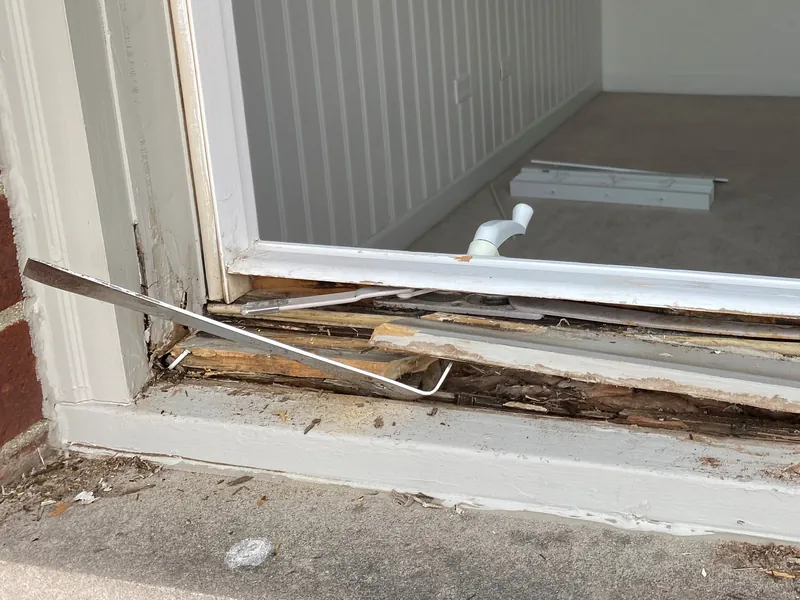
Rot almost always begins in one spot where water lingers — usually the sill or the lower corners of the frame. Caught early, it's a small, affordable repair. Left alone, it spreads into the frame, the wall, and eventually your interior finishes.
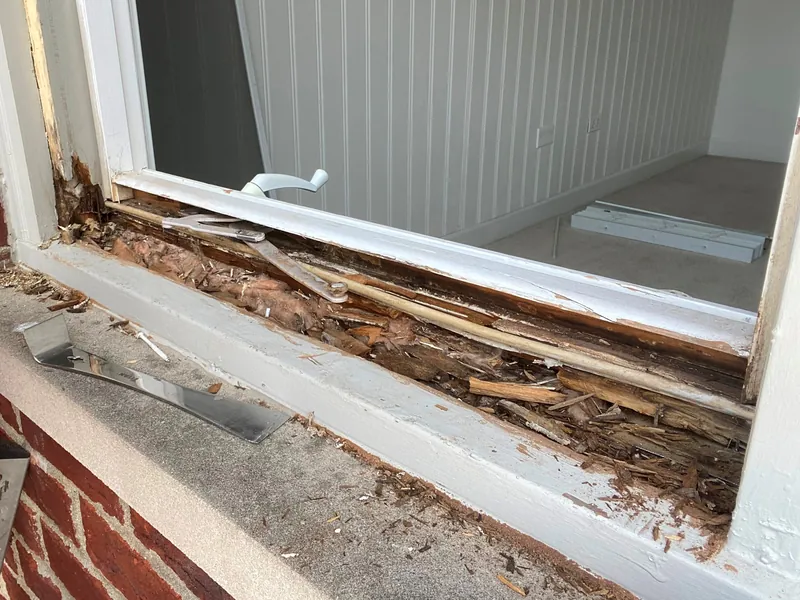
Window wood rot is caused by moisture: rain, snow, ice, and condensation working into the wood through failed caulk, cracked paint, worn glazing, or blocked weep holes. Once moisture is trapped, fungi break the wood down from the inside, turning firm timber soft, spongy, and crumbly.
Older wood is especially vulnerable because it loses its natural decay resistance over the decades — which is why rot is one of the most common problems on the area's older homes.
The good news: wood rot is highly repairable when it's addressed before it takes over the whole window. The key is a proper repair that removes all the decayed wood and stops the moisture that caused it — not a cosmetic patch that traps the problem underneath.
Where rot shows up first
The sill takes the most weather and rots first, followed by the lower frame and jamb corners, the bottom rail of the sash, and exterior trim and brick mold. We repair rot in all of these, and because they're connected, we check the surrounding wood so the repair is complete rather than partial.
Homeowners describe it in different ways — a rotten window frame, a rotted sash, soft wood around the glass, or paint that keeps peeling in the same spot. It's all wood rot, and window rot repair works the same way: find the full extent of the decay, remove it, and rebuild.
Larger areas get new wood spliced in (carpenters call it a Dutchman repair); small, shallow areas can be hardened with a wood consolidant and filled with an epoxy made for exterior wood.
Not sure this is your problem? Use our window triage guide — pick the symptom and see the likely cause and cost. Related reading: Window problems by home age · Window sill repair
Soft or spongy wood
Wood that gives when pressed, or that a screwdriver sinks into easily, has active rot beneath the surface.
Peeling or bubbling paint
Paint that flakes, bubbles, or won't hold is often a sign of moisture and decay working underneath.
Dark stains & cracks
Discoloration, dark patches, and cracking or gaps at the corners point to water intrusion and rot.
Musty smell or crumbling
A damp, musty odor near the window, or wood that flakes away in pieces, means decay is well underway.
- Sill — water and snow sit here longest, so paint fails first.
- Bottom rail of the sash — water runs down the glass and soaks into it.
- Lower ends of the frame and trim — end grain wicks up water where they meet the sill.
- Glazing joint — cracked putty lets water into the joint between glass and wood.
Rot usually stays in these zones — which is why it can be cut out and rebuilt.
Rotted Window Repair That Lasts
Remove All Decay
We cut out every bit of rotted wood back to solid, sound timber. Leaving soft wood behind is exactly why quick patch jobs fail.
Treat & Consolidate
The surrounding sound wood is treated with a penetrating hardener that strengthens it and helps resist future decay.
Epoxy or Timber Splice
Smaller areas are rebuilt with structural epoxy; larger ones get new matched-species wood spliced in and shaped to the original profile.
Seal, Prime & Match
Everything is sealed against moisture, then primed and painted to match — leaving a repair that's invisible and built to last.
- Find the rot — soft, dark wood — usually at a sill, a corner or the bottom of a sash.
- Cut back to sound wood — every bit of soft wood is removed, so the rot can't keep spreading under the repair.
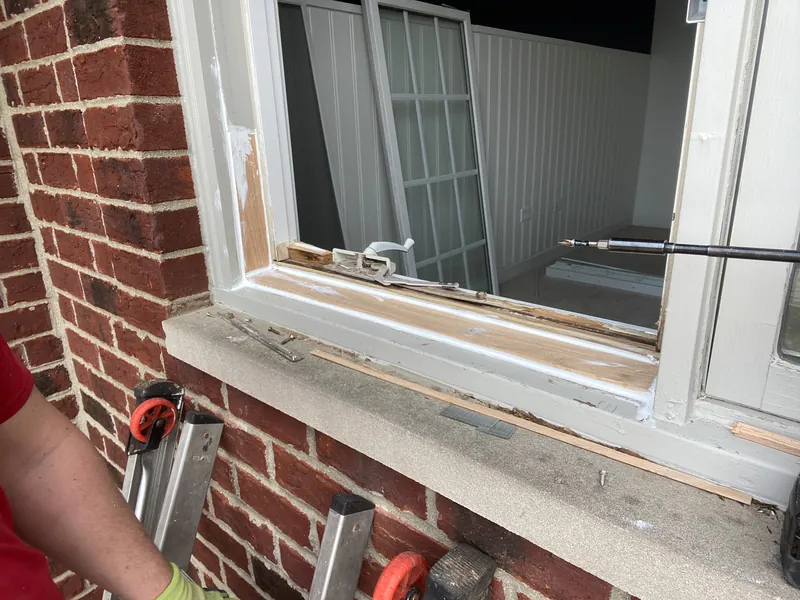
- Splice in new wood — matched wood is fitted, shaped to the original profile, then primed and painted to blend.
The rest of the window — and its original wood — stays in place.
Rotted Window Repair, Part by Part
Rot doesn't mean a new window — it means the part that rotted gets rebuilt. Find the part that's soft:
Rotted Window Sills
Exterior sills and interior stools rebuilt or replaced.
Rotted Window Sashes
Rotted rails and corners rebuilt, or a new sash made to fit.
Rotted Frames & Jambs
Jamb bottoms, frame corners and mullions rebuilt.
Bay & Bow Windows
Rotted mullions and seat boards repaired part by part.
Brick Mold
Rotted brick molding around windows rebuilt or replaced.
Door Jambs & Door Bottoms
Rot at the bottom of door frames and wood doors.
Whole Old Windows
Every part of a wood window restored at once.
Clad windows rot out of sight. Many windows from the 1980s onward are wood covered with an aluminum or vinyl skin.
When the seals at the corners fail, water gets under the cladding and the wood rots with little to see from outside — until the sash feels spongy or a corner separates. If your clad windows have loose, bulging or stained cladding at the bottom corners, it's worth a look.
Rotted Window Repair Cost vs. Replacement
Typical prices
Per window · typical local prices| Localized rot — sill or frame corner | $200 – $700 |
| Sash rot repair & restoration | $400 – $700 |
| Alignment after the repair (if needed) | $50 – $500 |
Replacement companies treat rot as a reason to sell you a whole new window. But rot is almost always localized, and repairing the damaged section costs a small fraction of a full replacement — while keeping the rest of a perfectly good window in place.
There's a second reason repair wins on older homes: original wood windows are often better built than modern replacements, made from old-growth timber that's denser and more durable than what's used today.
Replacing them swaps craftsmanship and character for a stock unit. A proper rot repair preserves the original window and, once painted, is impossible to spot. We provide an estimate after a free assessment, so you can weigh the real repair cost before making any decision.
Why rot is so common in McHenry County
Snow sits on sills for weeks, spring thaw soaks the bottom rails, and humid summers near the lakes and the Fox River never let the wood fully dry. Add the pre-war and mid-century homes in Crystal Lake, Woodstock and Carpentersville — built with old-growth wood that is well worth saving — and rot repair becomes one of the most valuable fixes a homeowner here can make.
Wood Rot: What You Can Do Yourself
Safe to do yourself
- Probe suspect wood with a screwdriver — if it sinks in easily, the rot is active.
- Keep gutters clear and sills free of snow and ice so water drains away.
- Touch up cracked paint on sills and sashes before winter — paint is the wood's first line of defense.
- Photograph the soft area and the whole window, then text us for a quote.
Call a pro
- Filling rot with wood filler or caulk — it traps moisture and the rot keeps spreading underneath.
- Cutting out rot that reaches the frame joints — the window can lose its structure.
- Rot you find around the outside of the frame or on the wall — that may be a siding or flashing leak.
- Painted wood in pre-1978 homes — old paint may contain lead and needs safe handling.
3-Year Warranty on Rebuilt Wood
Parts we don't make (cranks, balances, locks) carry only their supplier's warranty. Leaks from roofs, flashing or siding aren't window defects. Full warranty terms → · Read our reviews
Got a quote to replace these windows?
Send it to us before you sign. We'll tell you — free — whether a repair would solve it for less.
Rotted Window Repair Questions
More Wood Window Repairs
Rotted Wood Repair in these towns and more
Based in Lake in the Hills, serving homes within about 40 miles.
Rot Caught Early Is a Small Repair.
Call, text, or send a photo. You'll know what's wrong and roughly what it costs — before anyone comes out.
★★★★★ 4.9 from 145+ reviews · 20-year glass warranty · Price match